Sciatica Treatment in Atlanta
Sciatica is pain that travels along the sciatic nerve, from the lower back through the buttock and down the back of one leg. It is a symptom of something pressing on or irritating the nerve, most often a herniated disc or a narrowing of the spinal canal, rather than a diagnosis on its own. At Life Balance Pain Care in Atlanta, care begins with an evaluation to find what is compressing the nerve, followed by a conservative, non-surgical plan that may include image-guided epidural steroid injections, targeted physical rehabilitation, and supportive care.
Mon–Fri 9am–5pm · Request an appointment anytime
Does this sound like your pain?
Sciatica has a recognizable pattern. These are the symptoms patients describe to us most often.
Tap any symptom to find the right care, or search the whole site.
What sciatica actually is
The sciatic nerve is the longest nerve in the body. It forms in the lower spine, runs through the buttock, and travels down the back of each leg. When something presses on the nerve or on one of the roots that feed into it, pain can follow the whole length of that path. That is why sciatica so often shows up as back pain and leg pain at the same time, and why the leg symptoms are usually the ones people notice most.
Sciatica is a description of where the pain travels, not a diagnosis in itself. Two people with identical leg pain can have very different causes, and the treatment that helps one may do nothing for the other. Finding the source is the part that decides everything else.
Usually one-sided
Sciatica typically affects one leg. Pain down both legs is less common and worth prompt evaluation.
A symptom, not a diagnosis
The pain pattern points at the nerve. An evaluation is what identifies the cause behind it.
Often non-surgical
Many cases settle with conservative care. Surgery is a later consideration, not a first step.

How we treat sciatica
Careful evaluation
We take your history, examine how the pain moves and what provokes it, and test strength, reflexes, and sensation. Imaging is used when it will change the plan, not by default.
Find the source
The examination and imaging together tell us which nerve root is involved and what is pressing on it. That is what separates a plan that works from one that only chases the pain.
Start conservatively
Activity modification, targeted rehabilitation, and medication where appropriate come first. Many people improve at this stage without anything more invasive.
Image-guided injection when needed
If conservative care has not given enough relief, an epidural steroid injection placed with fluoroscopic or ultrasound guidance can calm inflammation around the affected nerve root. We discuss it with you before proceeding.
Get help with sciatica.
Schedule an evaluation or call our team. Most patients are seen quickly across our three metro Atlanta locations.

What presses on the nerve
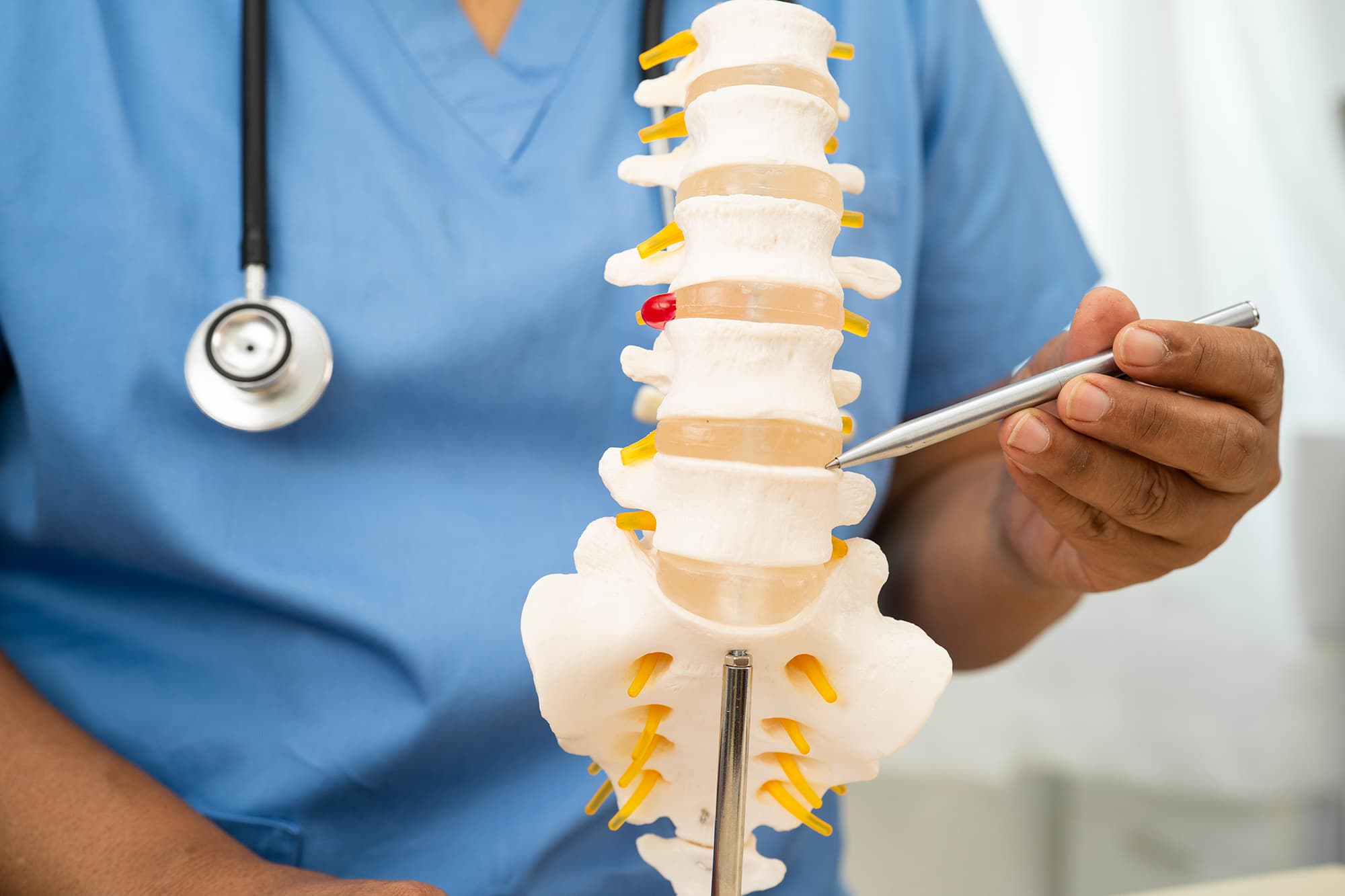
A herniated or bulging disc in the lower spine is the most frequent cause. The soft center of the disc pushes outward and contacts a nerve root, which irritates it both mechanically and chemically. Spinal stenosis, a narrowing of the canal the nerves pass through, is another common source and tends to affect people later in life. Less often, the nerve is irritated where it passes near the piriformis muscle deep in the buttock, or by a spondylolisthesis, where one vertebra slips slightly forward over another. Pregnancy, prolonged sitting, and heavy repetitive lifting can all make symptoms worse without being the underlying cause.
How it feels, and when to be seen
Most people describe a burning, shooting, or electric pain rather than a dull ache. It can be worse when sitting, when standing up after sitting, or when coughing or sneezing. Numbness, pins and needles, or weakness in the foot or leg can come with it. Symptoms that ease within a few weeks are common, and it is reasonable to give conservative measures time to work.
Some symptoms should not wait. Loss of bladder or bowel control, numbness in the groin or inner thighs, or weakness that is clearly getting worse can signal a serious problem with the nerves at the base of the spine and needs emergency care the same day. Pain that follows a fall or collision also deserves prompt evaluation rather than watchful waiting.

Frequently asked questions
How long does sciatica usually last?
Many episodes improve over several weeks with conservative care. Some resolve sooner and some persist longer, particularly when a disc herniation or stenosis is significant. If your pain is not improving, is getting worse, or keeps returning, an evaluation can identify what is driving it rather than waiting it out indefinitely.
Do I need surgery for sciatica?
Often, no. Most people with sciatica improve without surgery, and our approach starts with conservative and image-guided options. Surgery becomes a discussion when there is progressive weakness, when nerve compression is severe, or when conservative care has genuinely been given time and has not helped enough. We would talk it through with you before any referral.
When is sciatica an emergency?
Loss of bladder or bowel control, numbness around the groin or inner thighs, or leg weakness that is rapidly worsening can indicate a serious compression of the nerves at the base of the spine. These need emergency care the same day, not a routine appointment. Call 911 or go to an emergency department.
Is an epidural steroid injection painful?
A local anesthetic is used to numb the area first, so most patients tolerate the injection well. We place it using fluoroscopic or ultrasound guidance so the medication reaches the right spot. Your provider will go through what to expect and any activity restrictions before and after.
Do you treat sciatica after a car accident?
Yes. Crash-related disc injuries can produce sciatic pain that develops over the days after a collision. We treat accident-related injuries and accept attorney liens for personal-injury cases. Call 404-618-6825 to be seen at one of our Atlanta locations.